To control fungus gnats, make the potting mix less favorable to larvae, trap adults to reduce egg-laying, and use a labeled larval treatment when cultural controls are not enough. The key is breaking the life cycle in the growing medium, not just killing the small flies you see around the plant.
TL;DR: Confirm the pest, let the upper potting mix dry as much as the plant safely allows, empty standing water, remove decaying debris, use yellow sticky cards for adults, and consider Bti or beneficial nematodes for larvae according to product directions and local rules.
Confirm You Are Dealing With Fungus Gnats
Fungus gnats are small, delicate flies often seen hovering over moist potting mix or resting near houseplants. Adults are mainly a nuisance, while the larvae live in the growing medium and feed on fungi, decaying material, and sometimes fine roots.
Colorado State University Extension's fungus gnat guidance notes that moist growing media strongly favor infestations and that allowing the medium to dry between waterings is one of the most important management steps. That makes moisture control the first lever to adjust.
Do not confuse fungus gnats with fruit flies. Fruit flies are more strongly associated with fermenting food, drains, or overripe produce. Fungus gnats tend to stay close to pots and soil. If you are unsure, place a yellow sticky card near the potting mix and inspect the insects caught there, or use a local extension identification service.
If the infestation began around seedlings, review your indoor growing routine as well. The article on when to start seeds indoors explains why seed trays need steady moisture without remaining saturated.
Let the Potting Mix Breathe Between Waterings
Constantly wet media support fungus gnat eggs and larvae. For plants that tolerate it, allow the upper layer of potting mix to dry before watering again. Colorado State specifically recommends drying the top portion of the medium as a primary control step.
The exact drying depth and interval depend on the plant, pot size, temperature, humidity, and mix. Succulents can tolerate more drying than moisture-loving tropicals. The goal is not to dehydrate the plant; it is to stop keeping the surface continuously wet.
Empty saucers and cachepots after drainage. Check whether decorative outer pots are holding water around the nursery pot. Make sure drainage holes are open, and avoid adding a layer of rocks at the bottom as a substitute for a properly draining mix and container.
If the medium has broken down and stays wet for an unusually long time, repotting into fresh, appropriate potting mix may be more effective than trying to dry a dense, collapsed medium in place.
Use Sticky Cards to Monitor and Reduce Adults
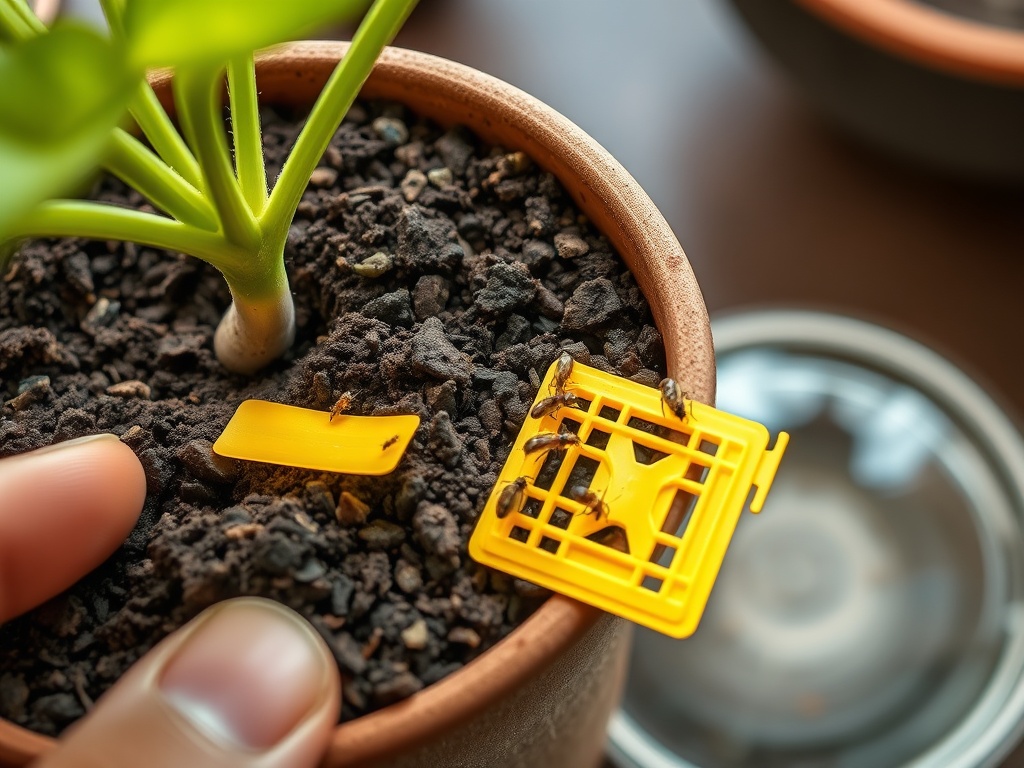
Yellow sticky cards placed close to the soil surface catch flying adults. They are useful for monitoring whether the population is rising or falling and can reduce the number of adults available to lay eggs.
Sticky cards do not kill larvae in the pot. That means they work best as part of a combined strategy rather than as the only treatment. Replace cards when they are covered with insects or dust, and position them where pets and children will not contact the adhesive.
A sudden drop in adults after placing traps can be encouraging, but keep managing the potting mix for several weeks because larvae and pupae may still be developing below the surface.
Target Larvae When Moisture Control Is Not Enough
The University of California Statewide IPM Program recommends prevention and cultural control first and notes that Bacillus thuringiensis subspecies israelensis, or Bti, can be used against fungus gnat larvae in products labeled for that use. Beneficial nematodes such as Steinernema feltiae are another biological option described by extension sources.
Read the product label carefully. Formulations, application rates, approved uses, and availability vary. A mosquito-control product is not automatically labeled for use in houseplant media just because it contains a similar organism. The label is the legal instruction in the United States, and other countries use different regulatory systems.
Avoid spraying the room repeatedly for adults while ignoring the potting mix. Adult-only control often gives temporary relief because new flies continue emerging from larvae in the container.
Clean Up the Conditions That Feed the Problem
Remove fallen leaves, dead roots, algae, and other decaying organic matter from the pot surface. Clean spilled potting mix from shelves and trays. If several plants are clustered tightly, inspect all of them rather than treating only the pot with the most visible adults.
New plants can bring fungus gnats into a collection. Isolate or closely inspect recent purchases before placing them among established plants. If you move houseplants outdoors in warm weather, check them again before bringing them back inside.
Potting practices matter too. Use clean containers and fresh commercial potting mix for repotting. Garden soil is generally a poor choice for indoor containers because it may drain poorly in pots and can introduce organisms that are easier to manage outdoors than inside.
If you are also maintaining outdoor beds, do not assume the same watering routine applies to pots. The comparison of sprinkler versus hand watering shows why container plants often benefit from direct observation and targeted watering.
Be Skeptical of Quick Home Remedies
Internet remedies such as cinnamon, coffee grounds, essential oils, or repeated hydrogen peroxide drenches are often presented as guaranteed cures. Evidence and plant safety vary, and household concentrations are not standardized for pest control. Some treatments can injure roots, alter the medium, or create new moisture problems.
A better sequence is to use methods with a clear mechanism: dry the upper medium within the plant's tolerance, improve drainage, remove decaying material, trap adults, and use a properly labeled biological or pesticide product if needed.
If a plant remains wilted or declines even after adult gnats decrease, investigate root health rather than assuming the remaining problem is insects. Root rot, nutrient issues, poor light, or a waterlogged mix can produce similar symptoms.
Prevent Reinfestation in a Plant Collection
Water individual plants according to need instead of watering the entire collection on the same day by default. Lift smaller pots to learn their wet and dry weight. Check the mix below the surface with a finger, moisture probe, or wooden skewer where appropriate for the plant.
Choose potting media that fit the species. A moisture-loving fern and a cactus should not be expected to thrive in the same mix. Repot when the medium has decomposed, compacted, or become difficult to rewet evenly.
When refreshing potting materials or garden soil, keep indoor and outdoor uses distinct. The guide to reviving tired garden soil between seasons focuses on outdoor bed health; indoor containers generally need a purpose-made potting medium rather than amended garden soil.
Break the Gnat Cycle at the Potting Mix
Fungus gnat control works best when you stop treating adults as the whole problem. Reduce excess moisture, improve sanitation, monitor with sticky cards, and target larvae only with methods appropriate for houseplants and allowed by the product label.
Start with the wettest pot in the collection. Check its drainage, remove standing water, clean the surface, and adjust the next watering based on the plant's actual moisture needs.
This information is for general educational use and is not a substitute for professional pest-control or horticultural advice. Pesticide and biological-control products, labels, and regulations vary by location; always follow the current label and local requirements.[/