
Clean a dryer vent by shutting down the appliance safely, cleaning the lint screen and accessible exhaust duct, checking the exterior vent opening, and reconnecting the duct without crushing or loosening it. If moving the dryer could strain a gas connection, the duct is inaccessible, or damage is visible, use a qualified appliance or vent professional instead.
TL;DR: Clean the lint filter every load, disconnect electrical power before working behind the dryer, do not disturb a gas line, vacuum and brush only accessible duct sections, inspect the outdoor termination, reconnect the duct securely, and stop if the setup requires disassembly or repair beyond routine cleaning.
Know Why Vent Cleaning Matters
Lint that escapes the filter can collect in the dryer cabinet, transition duct, exhaust duct, and exterior termination. Restricted airflow can lengthen drying time and contribute to overheating. The U.S. Fire Administration identifies failure to clean as a leading factor in home clothes-dryer fires and recommends routine lint-filter and vent maintenance.
CPSC safety guidance also tells consumers to clean the dryer vent, exhaust duct, and lint screen or filter periodically. These recommendations make vent cleaning a safety task rather than simply a way to improve appliance performance.
If the exterior vent terminates close to a low, wet lawn area, make sure landscaping does not bury or obstruct the outlet. A separate guide on improving lawn drainage in soggy areas can help address standing water outside without altering the appliance vent itself.
Watch for Signs of Restricted Airflow
Warning signs include longer drying, unusually hot laundry, excess room heat, burning or musty odors, visible lint, or an exterior flap that barely opens while the dryer runs.
These signs do not prove lint is the only problem. A crushed duct, damaged blower, disconnected joint, or appliance fault can look similar. If accessible cleaning does not improve airflow, arrange service.
Never continue running a dryer that smells like something is burning or shows signs of electrical or gas trouble. Shut it down and obtain qualified help.
Gather Basic Cleaning Tools
For routine accessible cleaning, use a vacuum attachment, dryer-vent brush intended for your duct type, the correct clamp tool, a flashlight, and gloves. Follow the dryer manual and brush instructions.
Avoid sharp improvised tools that can puncture ducting, and do not force a brush through elbows. Hidden or complex runs may need professional equipment.
Before moving the appliance, check what is behind it. Gas dryers require extra caution. If moving the dryer would pull, twist, disconnect, or otherwise stress the gas connector, do not proceed; call a qualified technician.
Clean the Lint Filter and Filter Housing
Remove the lint screen and clear lint before or after every load, following the manufacturer's instructions. Periodically inspect the filter for residue that blocks airflow and clean it using the method approved by the appliance manufacturer.
With the dryer off and unplugged, vacuum loose lint you can safely reach in the lint-filter housing without pushing tools into moving parts or wiring. If the housing requires panels to be removed, that moves beyond simple owner maintenance for many appliances. Follow the manual or use professional service.
The U.S. Fire Administration's basement and garage fire-safety guidance recommends cleaning dryer lint filters every use and cleaning vent ductwork yearly. Local conditions and dryer use can justify more frequent inspection.
Disconnect Power Before Cleaning Behind the Dryer
For an electric dryer, unplug the appliance before reaching behind it or disconnecting the exhaust duct. Do not rely only on the control-panel power button. If the plug or outlet is inaccessible or damaged, use a qualified electrician or appliance technician rather than improvising.
For a gas dryer, electrical power must still be disconnected before routine cleaning, but the gas connection adds another hazard. Do not disconnect gas piping or a flexible gas connector as part of a basic vent-cleaning article. If access requires moving or disturbing that connection, stop and call a qualified gas-appliance professional.
Once access is safe, loosen the exhaust connection as designed and move it only enough to clean without crushing or tearing it.
Remove Lint From Accessible Duct Sections
Vacuum loose lint from the dryer outlet and the accessible end of the exhaust duct. Insert a dryer-vent brush gently, following the tool instructions and the direction of the duct. Work in short sections and remove loosened lint rather than forcing a large mass farther into the line.
Be cautious with flexible or thin-walled transition ducts. They can tear or collapse if handled roughly. If the transition duct is damaged, excessively crushed, or not suitable for the appliance installation, replacement should follow the dryer manufacturer's instructions and applicable code.
Do not use a leaf blower or other high-pressure method as a universal shortcut. It can disconnect duct joints, push lint into inaccessible areas, or create a mess at the exterior termination. A method that works on one straight metal duct is not automatically safe for every vent system.
Inspect the Exterior Termination
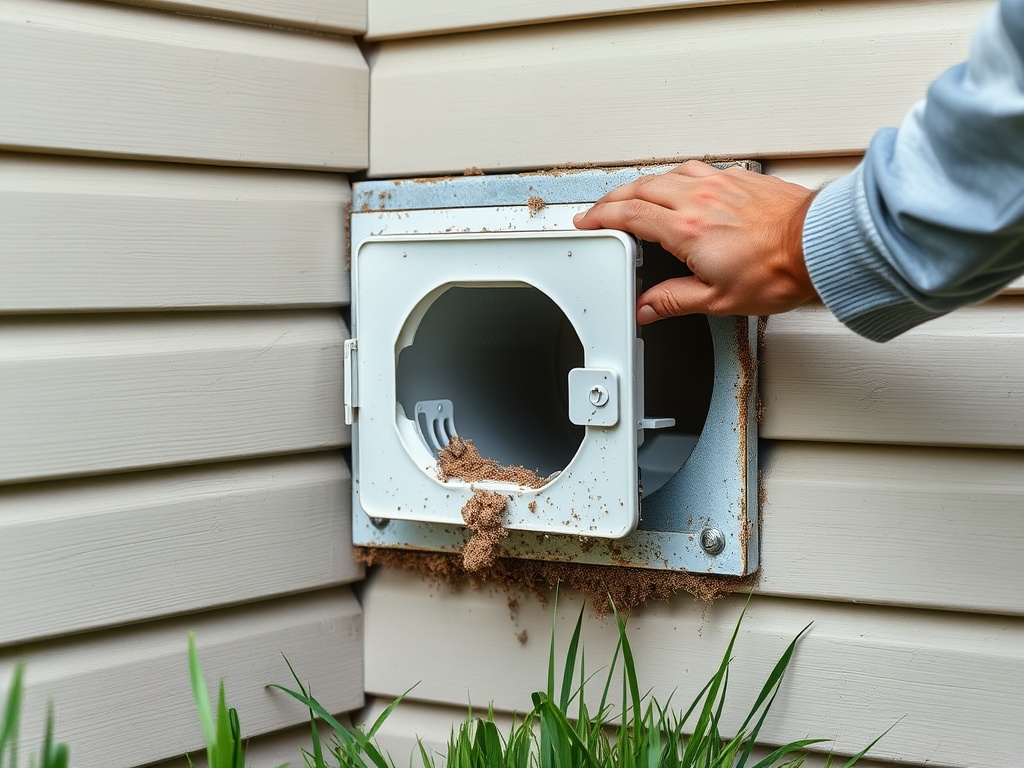
Find the vent outlet outside and remove visible lint or debris from the cover while the dryer is off. Make sure the flap or louvers can move freely and are not blocked by mulch, leaves, snow, nests, or landscaping.
Do not install a screen that is not permitted by the appliance instructions or local code, because fine mesh can collect lint and restrict exhaust. If birds or animals repeatedly enter the vent, use a code-compliant termination designed for dryer exhaust rather than improvised screening.
After reconnecting the duct and restoring power, run the dryer briefly according to the manufacturer instructions and confirm that air is exhausting outdoors and the flap opens normally. Stop if you hear unusual noise, smell burning, or find that the duct has come loose.
Know When the Job Needs a Professional
Professional cleaning is appropriate when the vent run is long, hidden, roof-terminated, difficult to access, repeatedly clogging, visibly damaged, or routed through many turns. It is also appropriate when the dryer must be disconnected from gas, panels need to be removed, electrical problems are suspected, or airflow remains weak after basic cleaning.
A technician can identify crushed ducting, disconnected joints, internal lint buildup, or routing problems.
Seasonal household maintenance often includes unrelated indoor and outdoor tasks. If you organize maintenance by season, reviving tired garden soil between seasons can sit on the outdoor side of the checklist while dryer-vent cleaning remains a separate appliance-safety task.
Keep a Simple Maintenance Routine
Clean the lint filter with every load and periodically inspect behind the dryer and at the outdoor termination for lint, damage, or obstruction.
The U.S. Fire Administration recommends annual vent-duct cleaning, while CPSC emphasizes periodic cleaning. Heavy dryer use, long vent runs, pets, and certain fabrics can affect how quickly lint accumulates, so treat yearly cleaning as a baseline to evaluate rather than a reason to ignore warning signs between cleanings.
Know When to Stop and Call a Pro
Routine dryer-vent cleaning should stay within safe access: filter, housing, transition connection, reachable duct, and exterior termination. The moment the job requires gas-line work, electrical repair, appliance disassembly, roof access, or aggressive work inside hidden ducting, it is no longer a simple homeowner cleaning task.
Use the next laundry day to check the lint filter, observe drying time, and confirm that the exterior vent opens freely. If anything looks restricted or damaged, schedule cleaning or service before the problem becomes more serious.
This article is general educational information and does not replace appliance manuals, building or fire codes, electrical or gas-safety requirements, or professional service. If you smell gas, suspect an electrical fault, or cannot safely access the vent, stop using the appliance and contact the appropriate qualified professional or emergency service.[/