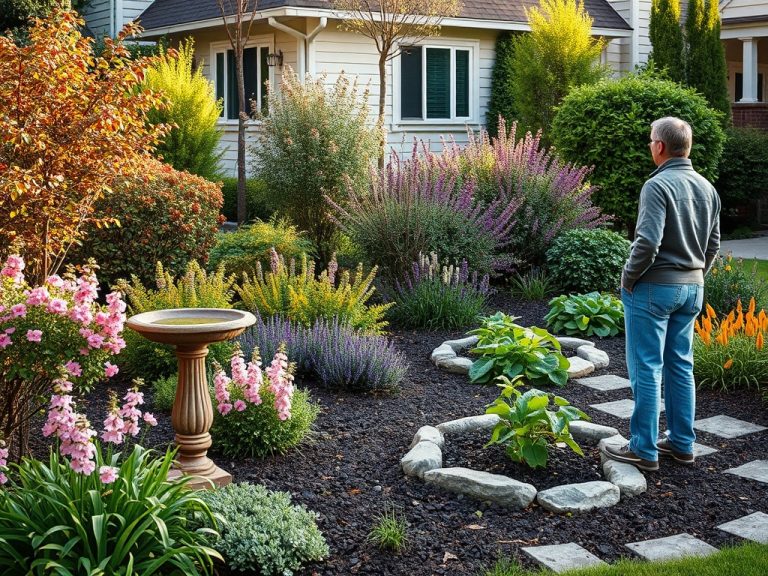
To improve a soggy lawn, identify why water is staying in the area before adding drains or new soil. Common causes include overwatering, compacted soil, runoff from roofs or paving, low spots, heavy soil, and site conditions that make turf a poor fit.
TL;DR: Watch the lawn during and after rain, shut off avoidable water sources, relieve compaction where appropriate, redirect concentrated runoff, correct minor grading problems carefully, and use drainage systems or lawn alternatives only when the underlying cause calls for them.
Diagnose the Water Source Before Digging
A wet patch after one intense storm is different from an area that remains saturated after ordinary rain. Observe the site while water is moving. Look for downspouts, irrigation overspray, driveway runoff, grade depressions, compacted paths, and water arriving from a slope.
The University of Maryland Extension notes that standing water, compaction, and overwatering can weaken lawns. Its guidance recommends managing incoming water, relieving compaction, and considering plants better adapted to wet areas when turf cannot thrive there.
Do not assume every puddle means you need a French drain. A drain will not fix over-irrigation, a downspout aimed at the lawn, or soil compacted by traffic. Solving the easiest source first can prevent unnecessary excavation.
If a tree is planned near the wet area, solve the drainage question before choosing the species. The guide to trees near patios and decks explains why soil drainage and rooting space should be part of tree selection rather than an afterthought.
Check Whether Compaction Is Part of the Problem
Compacted soil has less pore space for air and water movement. A lawn can therefore stay wet at the surface while roots below still struggle. Repeated foot traffic, vehicle traffic, construction, and working soil while it is wet can all contribute.
A core aerator removes plugs of soil rather than simply punching narrow holes. University of Maryland Extension's established-lawn guidance describes core aeration as a way to improve air and water movement in compacted turf. It also cautions that aeration alone cannot solve areas that are fundamentally too wet for grass.
Aerate when the grass is actively growing and conditions are suitable for your turf type. Avoid running heavy equipment over saturated soil, because the weight can create more compaction. If you are unsure about timing for warm-season or cool-season turf in your region, use local extension recommendations.
Stop Adding Water the Lawn Does Not Need
Before changing soil or grade, audit irrigation. Run each zone and watch where water lands. A tilted sprinkler head, broken nozzle, leaking valve, or schedule inherited from the hottest part of summer can create a recurring wet spot.
Reduce or pause irrigation in the soggy area and watch how the lawn responds over several normal weather cycles. If the problem disappears, the solution may be scheduling or hardware rather than construction. If water still collects after rain, continue diagnosing runoff and soil conditions.
Roof runoff deserves special attention. Downspouts that discharge into a low lawn can concentrate a large amount of water in one place. Where local rules permit, extend or redirect discharge toward an appropriate infiltration area, rain garden, or approved drainage route. Do not send water toward a foundation, neighboring property, sidewalk, or another location where it creates a new problem.
Correct Minor Surface Grading Carefully
Small depressions can sometimes be corrected by gradually rebuilding the soil surface and re-establishing turf. Larger grading changes are different. They can affect foundations, retaining walls, neighboring drainage, buried utilities, and local stormwater rules.
If soil settled after construction, determine how widespread the problem is before adding topsoil. Burying existing grass can create another weak layer. For substantial depressions, it may be better to remove turf, correct the grade with appropriate soil, compact it properly for the use, and then reseed or sod.
Never create a slope that directs surface water toward the house. If you cannot clearly identify a safe outlet for water, a drainage or landscape professional can evaluate elevations and options.
Consider Drainage Features Only When They Fit the Cause
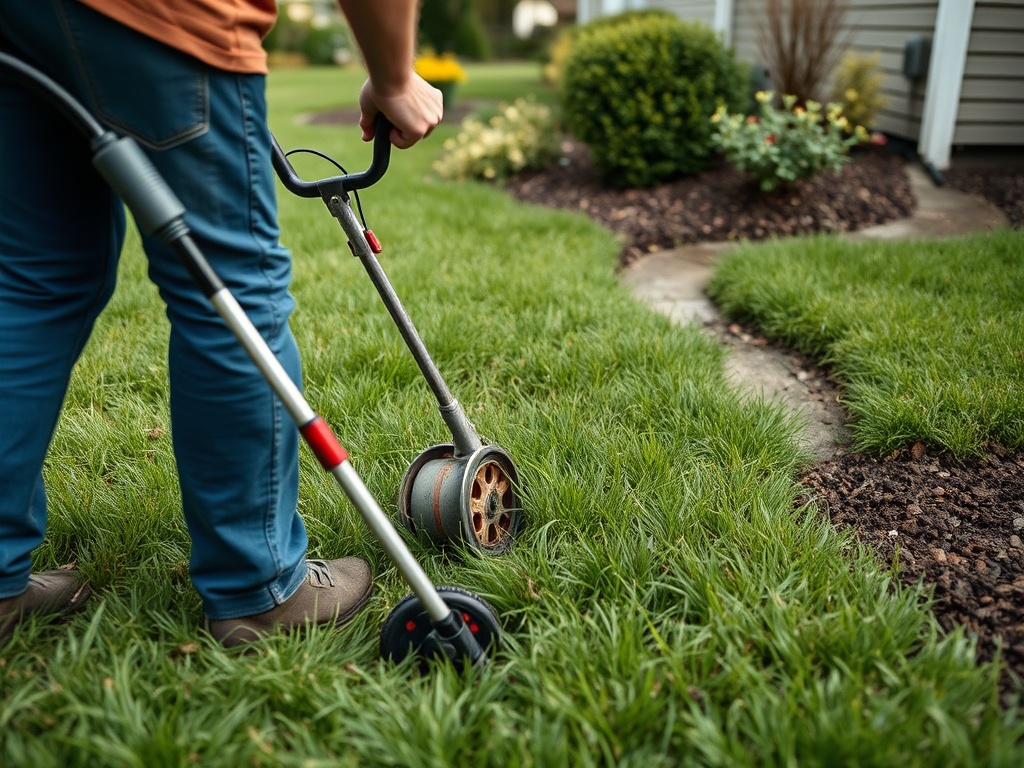
A subsurface drain, swale, dry well, catch basin, or rain garden can be useful in the right setting, but these are not interchangeable fixes.
| Approach | Best suited to | Important limitation |
|---|---|---|
| Core aeration | Surface compaction in otherwise suitable turf | Does not solve a high water table or major grade problem |
| Downspout redirection | Concentrated roof runoff | Requires a lawful and safe discharge or infiltration point |
| Shallow swale | Moving surface water across a broad route | Needs adequate slope and space |
| Rain garden | Temporarily holding and infiltrating runoff | Planting, soil, setbacks, and overflow need local planning |
| Subsurface drain | Persistent water that can be collected and discharged appropriately | Installation depth, outlet, utilities, and local rules matter |
| Lawn alternative | Sites naturally too wet or shaded for turf | Changes the landscape use and appearance |
Before trenching, locate buried utilities through the service required in your jurisdiction. In areas with septic systems, retaining walls, steep slopes, or foundation drainage, professional review is prudent because a new drainage route can affect systems beyond the lawn.
Rebuild Turf Only After Conditions Improve
Reseeding a wet patch before correcting the cause often leads to another thin patch. Once drainage has improved, loosen the surface as needed, add soil amendments only when supported by soil conditions, and use a grass species or cultivar recommended for the site's light and climate.
If the area is still consistently wetter than the rest of the yard, forcing turf may create ongoing maintenance. Moisture-tolerant groundcovers, shrubs, or a rain-garden planting can be a better fit where local conditions support them. That is a design choice, not a failure to "fix" the lawn.
Tool placement can also affect wet areas. Repeatedly rolling a mower, storage cart, or wheelbarrow over the same soft path can compact it. A more deliberate outdoor storage plan for tools and supplies can reduce traffic across vulnerable turf by keeping equipment closer to the route where it is actually used.
Avoid Common Drainage Shortcuts
Do not add sand to clay soil on the assumption that it automatically creates drainage; poorly chosen proportions can worsen structure. Do not bury construction debris, route drains without an outlet plan, or repeatedly top-dress a depression while ignoring where the water comes from. Avoid spike aerators marketed as equivalent to core aeration when compaction is the issue; removing plugs is the more established approach for opening pore space in turf.
Also resist the urge to fertilize a stressed wet lawn heavily. Nutrients do not correct oxygen-poor saturated soil, and excess fertilizer can move with runoff. Soil testing is a better basis for nutrient decisions.
If the wet lawn borders a patio or small social area, solve drainage before adding furniture, containers, or storage. The same principle behind small balcony entertaining ideas applies outdoors at ground level: keep circulation surfaces stable, dry enough for safe use, and free from clutter that hides drainage problems.
Fix the Cause Before You Reseed
A durable drainage fix is usually a sequence rather than a single product: observe water movement, remove unnecessary irrigation, manage roof runoff, relieve compaction, correct grade where appropriate, and escalate to engineered drainage only when the site requires it. Then repair the turf or choose a planting that suits the moisture that remains.
After the next ordinary rain, walk the property and mark where water enters, pools, and exits. That simple observation gives you a better starting point than buying drainage materials before you know the cause.
This home and garden information is educational and does not replace site-specific landscape, drainage, structural, utility, or legal advice. Drainage rules and safe discharge options vary by property and jurisdiction; consult qualified local professionals for major grading, subsurface drainage, utility, or foundation concerns.[/