The best tree near a patio or deck is not a single species. It is a site-matched tree whose mature size, roots, canopy, litter, water needs, and cold tolerance fit the space without forcing constant pruning or creating avoidable conflicts with hardscape.
TL;DR: Favor small to medium trees for constrained spaces, check mature width as carefully as height, verify local hardiness, avoid planting where roots and trunks have too little soil volume, and choose the amount of shade, flowers, fruit, and seasonal cleanup you are willing to manage.
Choose for the Site Before Choosing for Appearance
A patio tree may cast afternoon shade, frame a view, soften a fence, provide seasonal color, or make dining space feel less exposed. Those goals still come after the realities of the planting site.
University of Minnesota Extension guidance on tree and shrub planting emphasizes matching plants to soil, drainage, sunlight, available water, wind exposure, and nearby structures. That is especially important beside paving, where heat reflected from stone or concrete and limited rooting space can make the site harsher than the rest of the yard.
Cold tolerance also needs a local check. The USDA Plant Hardiness Zone Map helps U.S. gardeners compare a perennial plant's cold-hardiness rating with local winter conditions. It is a useful filter, not a complete planting decision; summer heat, soil moisture, salt exposure, wind, and microclimate can matter just as much.
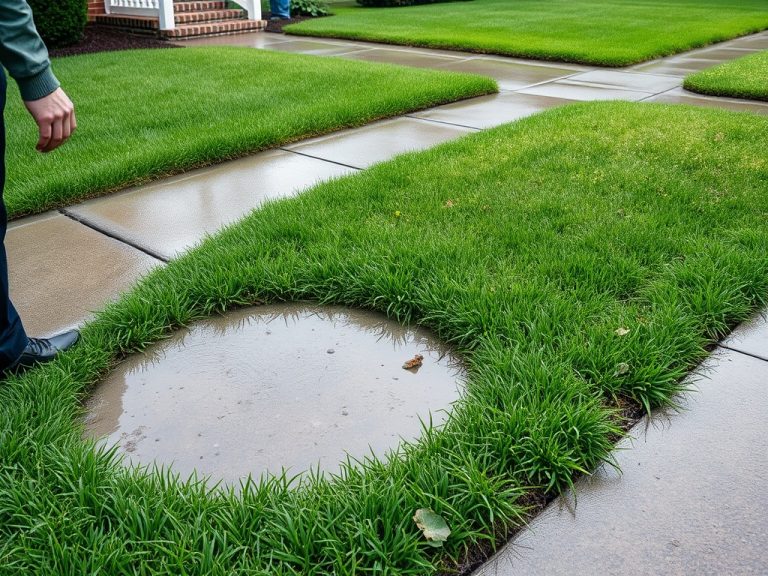
Before shopping, sketch the patio, deck, house wall, fence, utility lines, drainage paths, and the approximate area where roots can grow. If the site holds water after storms, address that condition first. The guide on improving lawn drainage in soggy areas can help identify whether water is collecting because of compaction, runoff, or grade.
A Practical Shortlist by Use Case
The following is a practical editorial shortlist, not a universal ranking. Species and cultivars differ, and suitability depends on local climate and site conditions.
| Tree type | Often a good fit when you want | What to watch for |
|---|---|---|
| Serviceberry | Multi-season interest and a lighter canopy | Fruit drop, suckering in some forms, regional disease pressure |
| Eastern redbud | Spring flowers and a modest ornamental scale | Heat, drought, and disease tolerance vary by region and cultivar |
| Japanese maple | Refined form for protected courtyards or smaller patios | Leaf scorch, wind exposure, and limited suitability in very hot or very cold sites |
| Crape myrtle | Long warm-season bloom in suitable climates | Not appropriate for colder regions; size varies widely by cultivar |
| Small magnolia | Strong spring display and sculptural branching | Flower or leaf litter and mature width can be substantial in some selections |
| Crabapple | Flowers, fruit, wildlife value, and many compact cultivars | Fruit persistence, disease resistance, and cleanup vary greatly by cultivar |
A nursery label may list a mature size, but cultivar descriptions and local extension recommendations are more useful when space is tight. "Small tree" is not a guarantee that a plant will remain clear of a roof edge, railing, walkway, or neighboring property without pruning.
Give Roots Real Soil Rather Than a Narrow Pocket
Tree roots need oxygen, moisture, and room. Planting a tree into a tiny cutout surrounded by compacted paving can limit those resources even if the canopy appears to fit. Root conflicts are not simply a matter of labeling a species "aggressive" or "safe." Soil volume, drainage, construction compaction, tree size, and distance from hardscape all influence how roots develop.
Avoid assuming that root barriers or routine root pruning can compensate for a poor planting location. Root pruning can stress or destabilize trees when done incorrectly. If the tree must be close to a structure, utility, retaining wall, septic component, or other critical feature, an ISA Certified Arborist or qualified local professional can evaluate the site before planting.
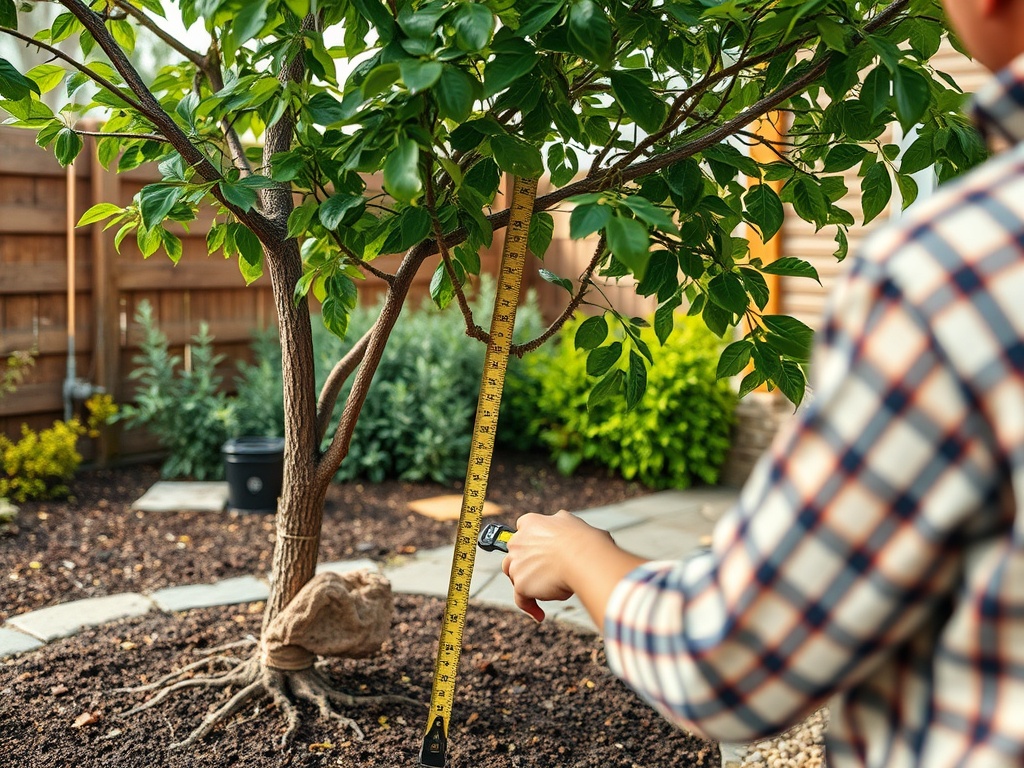
Also plan for the trunk flare and future trunk expansion. Do not position a young trunk so close to a deck edge, fence, or masonry corner that normal growth will create contact later. Extra room at planting is easier than redesigning hardscape later.
Decide How Much Shade and Cleanup You Actually Want
Patio shade can be valuable, but dense shade can also make a small outdoor area feel dark and can change what grows beneath the canopy. A high, filtered canopy often works well around seating because it softens sun without enclosing the space as heavily as a broad evergreen screen.
Flowering and fruiting trees add seasonal character, but petals, fruit, leaves, seedpods, or sap can land on furniture and paving. This is not a reason to avoid them; it is a maintenance preference. If the patio is used for dining every day, a low-litter cultivar may suit you better than a fruiting tree. If wildlife value matters more, seasonal cleanup may be an acceptable trade-off.
Think about furniture and circulation at the same time. If you are planning a compact social area, the ideas in small balcony entertaining translate well to patios: protect clear movement paths, avoid crowding the main seating zone, and keep frequently used surfaces easy to access.
Match the Tree to Patio Exposure
Hot west-facing spaces
Late-day reflected heat can be severe near masonry. Choose a tree recommended locally for heat and drought conditions, and make sure the rooting area can be watered deeply during establishment without saturating the patio base.
Sheltered courtyards
Protected spaces can create warmer microclimates but may have poor airflow or limited sun. Japanese maples and other delicate ornamentals can be attractive here when their light and climate needs are met, but they should not be chosen solely because the space looks protected.
Deck edges and raised structures
A deck can cast deep shade on one side and expose the canopy to sun and wind above. Confirm where the roots will actually grow and whether construction footings or compacted fill limit the planting area.
Utility corridors
Do not plant first and solve utility conflicts later. Penn State Extension's guidance on trees and utilities reinforces the need to match mature tree size with available rooting and overhead space. Always follow local utility-location requirements before digging.
Plan for Establishment Care
A newly planted tree needs consistent care while roots establish. Water based on soil moisture and weather rather than a fixed calendar. Mulch can moderate soil conditions, but piling mulch against the trunk creates problems; keep the trunk flare visible. Stake only when site conditions or root-ball stability make it necessary, and remove supports according to professional guidance rather than leaving them indefinitely.
Pruning should focus on structure and clearance, not repeatedly forcing a tree into a space that is too small. A species that naturally fits the site is usually easier to maintain than one chosen for looks and then heavily cut back each year.
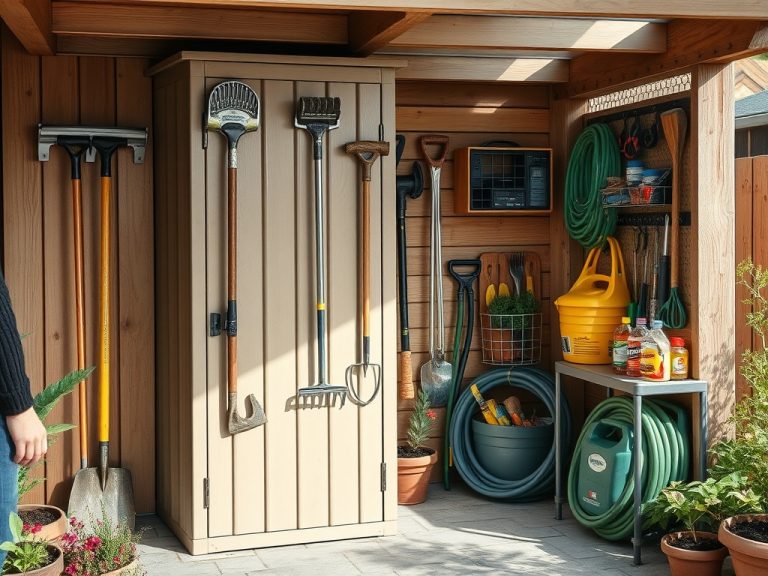
Outdoor tools, watering supplies, cushions, and pruning equipment can also accumulate around a patio. A planned outdoor storage setup for garden tools and supplies keeps the root zone and walking areas clearer than improvised bins placed wherever space remains.
Choose the Tree Before You Choose the Look
Start with constraints: climate, soil, drainage, available root space, mature canopy width, utilities, and the distance to paving and structures. Then decide which qualities you want most, such as shade, flowers, fall color, wildlife value, or low seasonal cleanup. That sequence turns a decorative purchase into a landscape decision with a better chance of aging well.
Create a shortlist of two or three locally recommended species or cultivars, compare their mature characteristics, and have a local arborist or extension professional review the site if clearance, roots, utilities, or structural concerns are tight.
Home and garden information is educational and general. Tree suitability, planting distances, utility requirements, and landscape regulations vary by site and jurisdiction; consult local extension guidance, utility services, and a qualified arborist when needed.[/