Racquet-sport endurance is the ability to repeat short sprints, split steps, lunges, rotations, and recovery movements without losing timing. The safest way to build it is to progress court intervals, strength work, and recovery together instead of adding endless hard sessions.
Reader takeaway: Train the pattern of the sport: short bursts, quick recovery, and decision-making under fatigue. Avoid burnout by making one variable harder at a time.
The kind of endurance racquet players actually need
Tennis, badminton, squash, racquetball, and pickleball are not steady jogging contests. They are stop-start sports where footwork quality determines shot quality. A player who can run a long distance may still fade on court if they cannot recover between rallies or repeat lateral movements.
General activity guidelines from the World Health Organization support regular aerobic and strengthening work, but court endurance needs a sport-specific layer. That layer includes acceleration, deceleration, rotation, grip relaxation, breathing control, and calm shot selection while tired.
Burnout usually appears when players confuse “more work” with better work. The USTA recovery material for tennis emphasizes that recovery matters from session to session and week to week, which is especially relevant in sports with frequent practice and match play.
A four-week court-conditioning progression
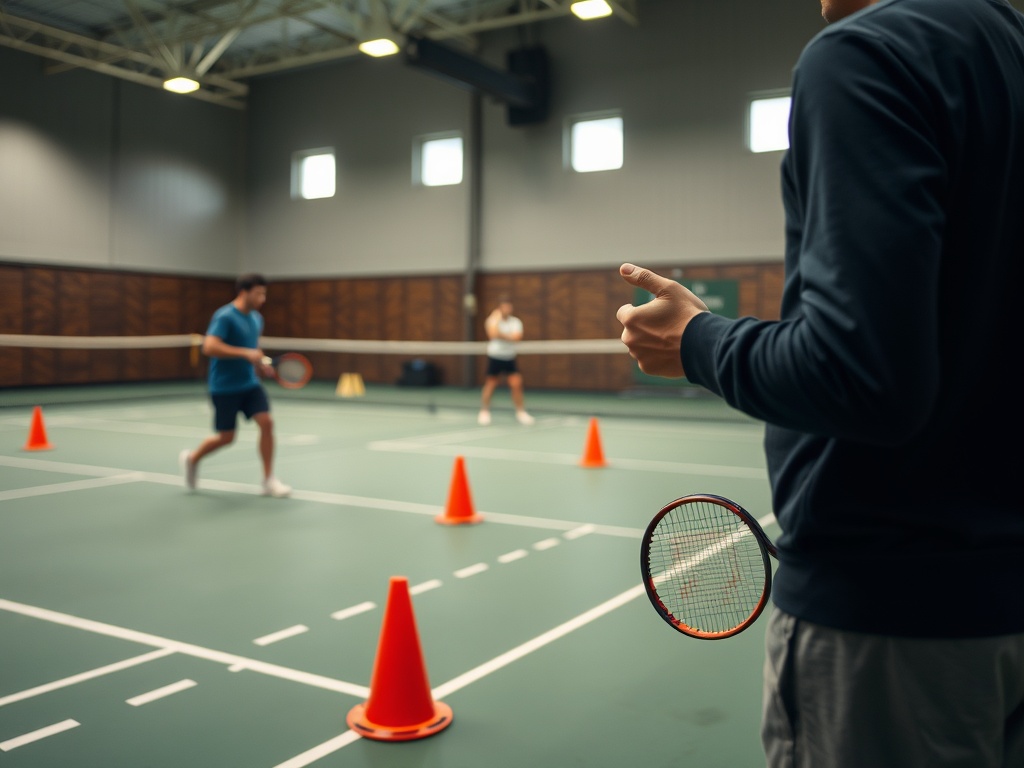
- Week 1: Use 8 to 10 controlled rally simulations of 20 seconds, with 40 to 60 seconds of easy recovery. Keep strokes smooth and stop before form breaks.
- Week 2: Add lateral shadow swings and split-step timing. Keep the same total volume but make movement more realistic.
- Week 3: Extend selected intervals to 30 seconds while keeping recovery honest. Use a talk test: you should recover enough to execute the next repetition cleanly.
- Week 4: Add simple decision cues, such as forehand/backhand calls or short/deep targets. Fatigue plus decision-making is closer to match demand than fatigue alone.
Why recovery protects performance
Recovery is not a reward after hard work. It is part of the training stimulus. Muscles, tendons, coordination, and attention all need time to rebound. If every session is maximal, the player may get tired without becoming more durable.
A useful weekly structure is two court-skill days, one interval-focused conditioning day, one strength and mobility day, one lighter hitting day, and at least one real rest or active recovery day. Competitive players may need more, but the principle stays the same: alternate stress and adaptation.
For broader endurance planning, compare this approach with training for endurance events while avoiding overuse injuries. The same warning signs apply: persistent soreness, declining performance, mood changes, sleep disruption, and loss of enthusiasm.
Technique cues that keep conditioning from becoming sloppy
- Land quietly and keep the first recovery step small, not dramatic.
- Exhale during striking or directional change to reduce upper-body tension.
- Reset the racquet or paddle before moving, so the next shot does not start late.
- Use rally length, not exhaustion, to decide when an interval ends.
- Track quality reps rather than total sweat.
Measure improvement without chasing exhaustion
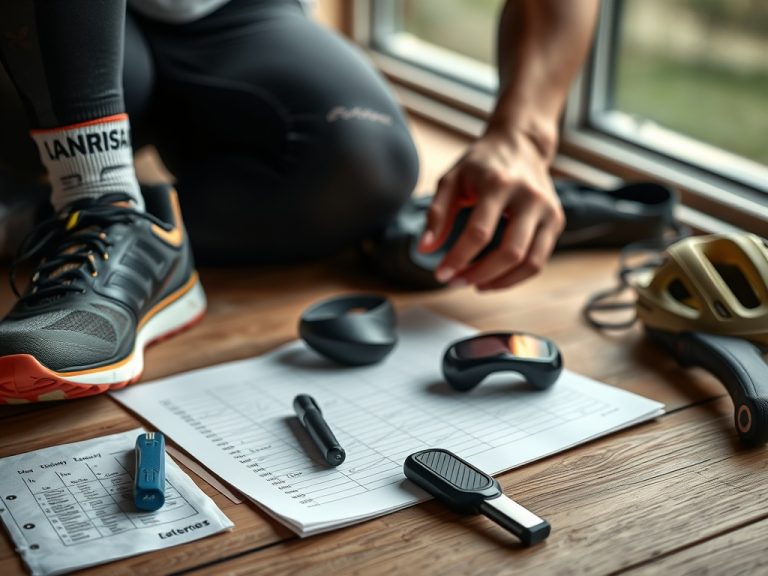
Better endurance shows up as steadier footwork late in practice, fewer rushed errors after long rallies, and faster breathing recovery between points. A simple scorecard can track rally quality, perceived effort, and next-day freshness.
The goal is repeatability. If a player finishes every workout crushed, they may be practicing survival rather than performance. If they finish challenged but able to return in two days, the plan is probably closer to sustainable.
A sample session that builds stamina without punishment
Start with eight minutes of movement preparation: skips, side shuffles, hip mobility, and relaxed shadow swings. Then complete three sets of six rally simulations. Each rally lasts 20 to 25 seconds, followed by 45 seconds of walking recovery. The athlete should finish each repetition with the same posture and racquet preparation used at the start.
After the main set, add two short footwork games where the player reacts to a partner’s call rather than a fixed pattern. This matters because real endurance includes perception. A player who only trains scripted movement may still fade once decisions enter the drill.
End with five minutes of easy hitting or mobility. The cooldown is not filler. It is where the athlete learns to shift from effort back to control, which is exactly what happens between long rallies and the next serve.
How to adjust for tennis, badminton, squash, and pickleball
Tennis players often need more room for recovery between long baseline exchanges, while squash players may need denser intervals because rallies can be continuous and movement is highly compressed. Badminton athletes should respect jump and lunge volume, especially around the Achilles, knee, and hip. Pickleball players may need less total court distance but more attention to repeated starts, stops, and low ready positions.
The principle stays consistent: match the drill to the sport’s movement pattern, then protect quality. Add one stressor at a time, such as longer rallies, shorter recovery, sharper direction changes, or more decision cues.
Workload notes for mixed-level racquet groups
Group practices often include players with different fitness levels. Instead of forcing everyone into the same volume, keep the drill structure consistent and adjust recovery, court size, or target difficulty. Stronger athletes can handle shorter rest or more demanding targets. Developing athletes can keep the same pattern with cleaner technique and more recovery.
This protects morale because nobody feels removed from the session, while still respecting individual adaptation. Conditioning should challenge the athlete in front of you, not the imaginary average of the group.
Build stamina that still feels like your sport
Choose one drill from the progression and repeat it twice per week for a month. Add difficulty only when your movement, shot preparation, and recovery stay consistent. That is how endurance becomes a competitive advantage instead of another source of burnout.