
To train for endurance events without overuse injuries, build volume gradually, alternate hard and easy work, strength train, fuel consistently, and respond early to pain or fatigue. The goal is not to avoid stress, but to apply stress in amounts your body can adapt to.
Reader takeaway: Endurance success comes from repeatable weeks. A spectacular workout followed by pain is less valuable than steady training your body can absorb.
Why overuse happens in endurance training
Overuse injuries often come from repeated stress without enough recovery. Runners, cyclists, swimmers, rowers, and triathletes all need progressive load, but tissues adapt at different speeds. Cardiovascular fitness can improve faster than tendons, bones, and supporting muscles.
The American Academy of Pediatrics report on overuse, overtraining, and burnout focuses on young athletes, but the lesson is broader: excessive training volume without adequate recovery can harm performance and well-being. Adult endurance athletes face a similar pattern when they increase mileage, intensity, hills, or racing too quickly.
A safe plan treats fatigue as information. Tiredness after a hard session is normal. Pain that changes movement, worsens during training, or lingers into the next session deserves attention.
The three-load rule for safer progress
- Increase only one major variable at a time: total volume, intensity, or technical difficulty.
- Keep easy days genuinely easy so hard days can be high quality.
- Use recovery weeks after several building weeks, especially before races or testing sessions.
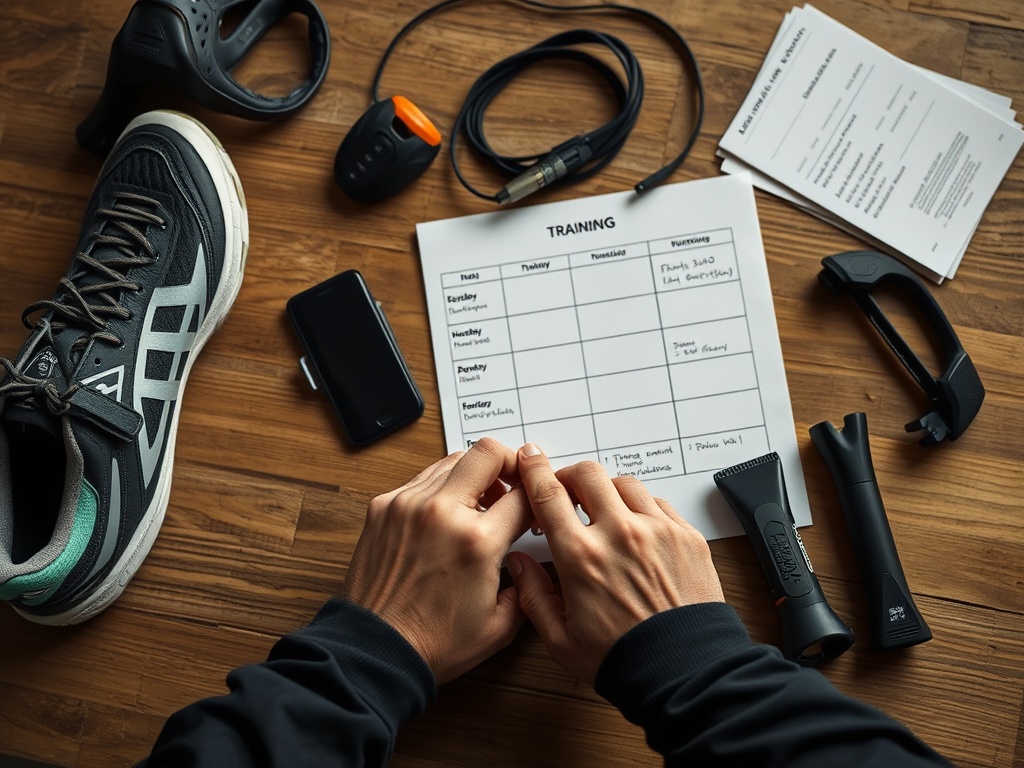
A weekly structure that supports adaptation
| Day type | Purpose | Example |
|---|---|---|
| Easy aerobic | Build base with low stress | Conversational run, ride, swim, or row |
| Quality session | Improve pace, hills, threshold, or race skill | Intervals with full warm-up and cooldown |
| Strength support | Raise tissue capacity and control | 30 to 45 minutes of focused strength |
| Recovery | Absorb training | Rest, mobility, walking, or light spin |
| Long session | Practice duration and fueling | Long run, ride, swim set, or brick workout |
Strength and mobility are not optional extras
Endurance athletes sometimes skip strength work because it does not look like their event. That can be shortsighted. Strength training supports tissue capacity, posture, and late-event mechanics. It also gives athletes another way to improve without always adding more miles or minutes.
General exercise guidance from ACSM emphasizes the value of physical activity and structured exercise. For endurance athletes, strength sessions can be short and focused: calf raises, hip hinges, squats or step-ups, rows, carries, and trunk control.
Sport-specific athletes can adapt these ideas into court or field contexts. For example, racquet players can pair this endurance framework with building endurance for racquet sports without burning out.
Warning signs that should change the plan
- Pain that makes you limp, alter stroke mechanics, or avoid normal movement.
- Performance dropping for several sessions despite effort staying high.
- Unusual irritability, poor sleep, or loss of motivation.
- Resting soreness that concentrates in one bone, tendon, or joint.
- Needing more stimulants, pain relievers, or “mental toughness” just to complete normal training.
Fueling and sleep make the plan real
Training stress without enough energy is harder to adapt to. Carbohydrates support demanding sessions, protein supports repair, and regular hydration helps maintain output. Sleep is when much of the adaptation process becomes possible.
Athletes do not need perfect routines. They need repeatable basics: eat before long or hard work, refuel after, sleep enough to wake functional, and avoid stacking stress from travel, work, and training without adjustment.
How to decide when soreness is acceptable
Some muscle soreness after a new training stimulus is normal. Sharp pain, pain that changes your stride or stroke, swelling, pain that worsens as you continue, or soreness that concentrates in a bone or tendon is different. Endurance athletes should treat those signs as information, not as a character test.
A practical rule is to evaluate symptoms before, during, after, and the next morning. If discomfort warms up and disappears without changing movement, it may be manageable. If it grows during the session or is worse the next day, reduce load and seek qualified guidance if it persists.
This approach does not make athletes timid. It keeps small issues from becoming long interruptions.
Race preparation without last-minute panic
Many overuse problems appear when athletes try to make up missed training in the final weeks. Fitness cannot be crammed safely. If a build has gone poorly, adjust the race goal rather than forcing the original plan.
Use the last phase to practice pacing, fueling, equipment, and sleep routines. Those details can improve race day without adding risky volume. A slightly undertrained but healthy athlete usually has more options than a highly trained athlete managing pain.
How to return after a small setback
If you miss several sessions or reduce training because of soreness, return through time and frequency before intensity. A few easy sessions rebuild rhythm and confidence without immediately stressing the same tissue that complained before.
Avoid testing fitness on the first day back. The goal is to confirm that normal movement feels normal again. Once that is true, rebuild gradually and identify what caused the setback so the plan improves rather than repeats the same mistake.
What to log after each training week
A simple log helps prevent emotional decision-making. Record total time, one hard-session note, one recovery note, any pain location, and what you would change next week. The log does not need to be complex. It only needs to reveal patterns before they become problems.
If soreness appears after every hill day, if sleep drops after double sessions, or if long workouts always lead to poor technique, the next adjustment becomes obvious. Good endurance training is a feedback loop, not a fixed script.
Finish healthy enough to race again
The best endurance plan leaves you prepared and intact. Build patiently, respect early symptoms, and judge success by consistency across months, not heroics across one weekend.