Event planners choosing resorts need more than a list of attractive properties. The strongest research process combines a venue-sourcing database, professional meeting standards, destination resources, property documents, and a structured RFP so that space, guest rooms, transportation, accessibility, technology, food and beverage, and contract terms can be compared on the same basis.
TL;DR: Build requirements before browsing venues. Use a sourcing platform to create a qualified longlist, professional meeting-industry resources to define standards, resort floor plans and capacity documents to test fit, and a detailed RFP to expose pricing and operational differences. Site inspections and written confirmations should validate the finalists.
Start with the event brief, not the resort gallery
A beachfront photo can attract attention, but it cannot tell you whether a resort can move 350 attendees from a general session to breakouts in ten minutes. Before opening a venue database, define the event's non-negotiables: dates, peak guest rooms, meeting-room pattern, food and beverage needs, production requirements, arrival profile, accessibility, outdoor-event plans, budget structure, and decision deadline.
This prevents the venue search from being driven by amenities that matter less than operational fit. It also gives every resort the same specification, which makes later proposals easier to compare.
For planners who want a broad property database, the Cvent Supplier Network describes searchable venue inventory, filters, RFP distribution, bid management, and reporting. It is a commercial platform, so use it as a sourcing and workflow tool rather than as a substitute for contract review or first-hand validation.
Use industry resources to define what "meeting-ready" means
Professional associations can help planners translate general requirements into practical venue criteria. Meeting Professionals International's planner resources point to destination and venue finders, education, safety resources, and other planning tools. IACC's event-planning resources focus on venues designed for meetings and reference quality standards and RFP tools.
These resources do not guarantee that a particular resort is right for your program. They are useful for building a checklist: meeting-room functionality, acoustics, audiovisual capability, food service, breakout flow, staffing, connectivity, and delegate experience.
If you are comparing travel costs alongside meeting fit, price-tracking tools for hotel stays can help separate room-rate movement from the wider event package.
Build a sourcing table that forces comparable answers
A resort proposal can look competitive because one charge is included while another is listed separately. Normalize the responses before ranking them.
| Category | What to collect | Why it changes the decision |
|---|---|---|
| Guest rooms | Peak rooms, rates, taxes, mandatory fees, attrition, cut-off | Determines attendee cost and block risk |
| Meeting space | Dimensions, capacities, ceiling height, columns, setup limits | Tests whether the agenda actually fits |
| F&B | Minimums, service charges, menu pricing, concessions | Often a major part of total event spend |
| AV and internet | Provider rules, bandwidth, rigging, power, exclusivity | Can create large operational and budget differences |
| Transportation | Airport distance, transfer options, coach access | Affects arrival experience and schedule reliability |
| Outdoor backup | Weather plan, indoor hold space, decision deadlines | Protects agenda continuity |
| Accessibility | Routes, guest rooms, meeting access, transport | Essential to attendee participation |
Ask resorts to answer the same questions in the same order. If a response is missing, flag it as an open item rather than estimating.
Inspect floor plans before comparing capacity numbers
Published capacities are starting points. A ballroom listed for a large reception may not support your stage depth, camera position, classroom setup, exhibit footprint, or buffet plan at the same stated capacity.
Request scaled floor plans and confirm usable dimensions, ceiling height, columns, built-in stages, freight access, pre-function areas, restroom placement, and loading routes. Then sketch the event's actual setup. If you use an external diagramming tool, label the version and date so later venue revisions do not get mixed with an old plan.
This is where resources for comparing room maps can also help for guest-room block strategy, especially when VIPs, accessibility needs, families, or staff must be placed near particular elevators or meeting zones.
Treat resort leisure features as operational variables
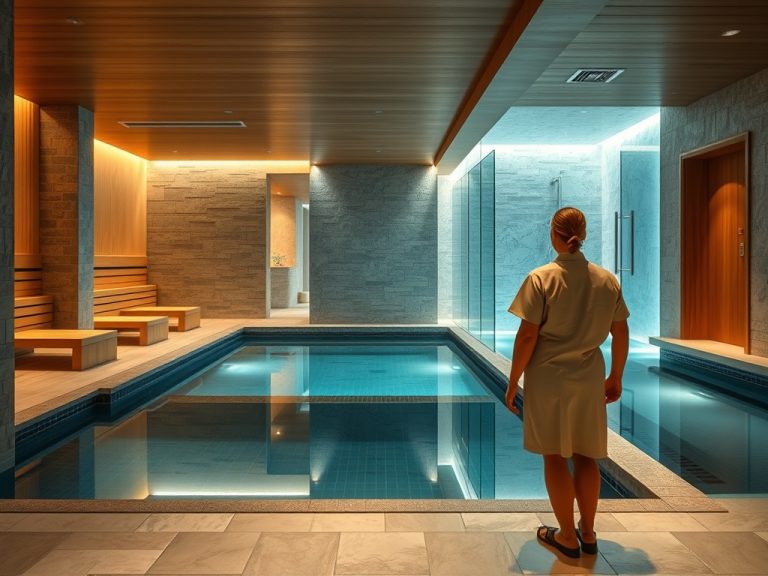
At a resort, pools, beaches, golf, spas, restaurants, and excursions can be meaningful event assets, but they can also affect traffic flow, weather exposure, buyouts, staffing, and attendee dispersion. An incentive program may benefit from broad recreation choices, while a tightly scheduled leadership meeting may need compact circulation and fewer distractions.
Compare amenity access in operational terms. Ask whether spaces are shared with leisure guests, whether reservations are required, how group bookings are handled, and what happens if weather cancels an outdoor activity. For dining, clarify private-room availability, restaurant buyout rules, dietary accommodation processes, and the difference between group menus and regular guest offerings.
Avoid assuming that "all-inclusive" simplifies every event cost. Group packages can use different inclusions from transient leisure rates, and private functions may carry separate food, beverage, production, or venue charges.
Use the RFP to expose hidden dependencies
A strong RFP asks not only "what does this cost?" but also "what must happen for this to work?" Identify exclusive vendors, required security, minimum staffing, union rules where applicable, curfews, outdoor sound restrictions, weather decision points, storage, shipping, rehearsal access, and move-in windows.
Ask for all mandatory charges and service fees to be itemized. Clarify whether taxes apply to room rates, resort fees, food and beverage, service charges, audiovisual services, or rentals. For U.S. short-term lodging, federal pricing rules affect how consumer lodging prices are displayed, but group event agreements have additional negotiated components that still require line-by-line review.
Create a separate assumptions column in your comparison. If Resort A includes basic internet and Resort B requires a custom network, do not compare their meeting-package totals until the network requirement is priced at the level your event needs.
Validate finalists with a purposeful site inspection
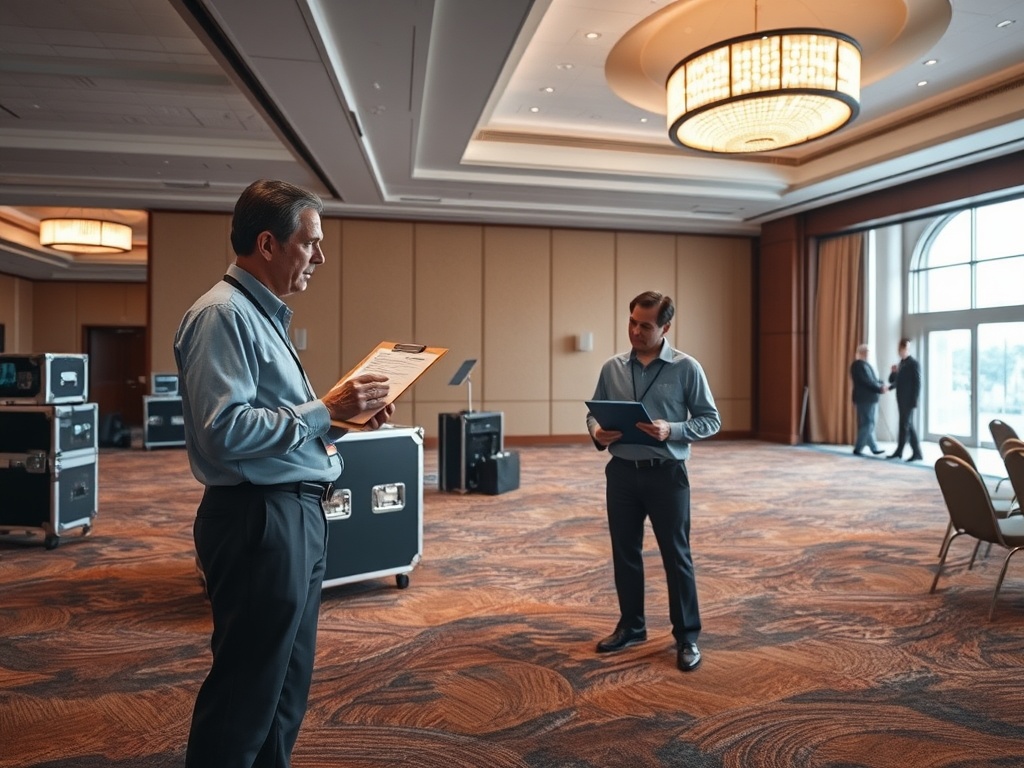
A site visit should test the agenda. Walk the attendee route from guest rooms to general session, breakouts, meals, outdoor functions, registration, transportation loading, and emergency exits. Time key transitions. Stand in the back of meeting rooms and evaluate sightlines. Check where production cases enter. Review what happens when two groups share pre-function space.
Meet the people who would support the program when possible, but do not treat a strong sales presentation as proof of execution. Ask for written answers to outstanding operational questions and confirm which commitments will appear in the contract or banquet event documentation.
For resorts in unfamiliar destinations, destination management organizations and local convention bureaus can also help explain seasonal demand, transportation patterns, major events, and local supplier ecosystems. Verify time-sensitive facts close to the event date.
Reduce the shortlist with weighted criteria
Once proposals are normalized, score the factors that matter most to your specific event. A leadership retreat might weight privacy, meeting flow, and service response heavily. A sales incentive might emphasize destination appeal, recreation, and air access. A training program might prioritize meeting-room quality, Wi-Fi, and cost consistency.
Keep subjective judgments labeled as such. "Best atmosphere" is an opinion; ballroom dimensions, airport distance, room-block terms, and stated service charges are measurable inputs. Separating the two makes stakeholder discussions more transparent.
Move from attractive resort to defensible venue choice
The final recommendation should show why the resort works for the agenda, attendees, budget, and risk profile. Use sourcing tools to find options, industry resources to sharpen the criteria, floor plans and RFP responses to test feasibility, and site inspections to validate the operational reality. A resort becomes a strong event venue when the details support the program, not simply when the property looks impressive.